How Formula Companies Mislead Parents
Why Newborn Tummy Size Matters
Understanding the size of a newborn’s stomach is crucial for establishing healthy feeding practices. At birth, a baby’s tummy is no larger than a cherry, which means it can hold only a small amount of milk. Overfeeding can lead to discomfort and potential health issues.
Some information on a baby’s stomach size found online or even given in hospitals, is represented by formula companies. –These companies encourage rapid increases in quantity of feeding. Volume is increased, because unlike breastmilk, formula is not a living substance and cannot change to meet the demands of a growing baby. Many formula companies mislead parents with images and measurements that do not accurately represent a newborn’s true tummy size. Here, we will provide you with the truth about newborn tummy size and the appropriate amount that is needed to feed your baby.
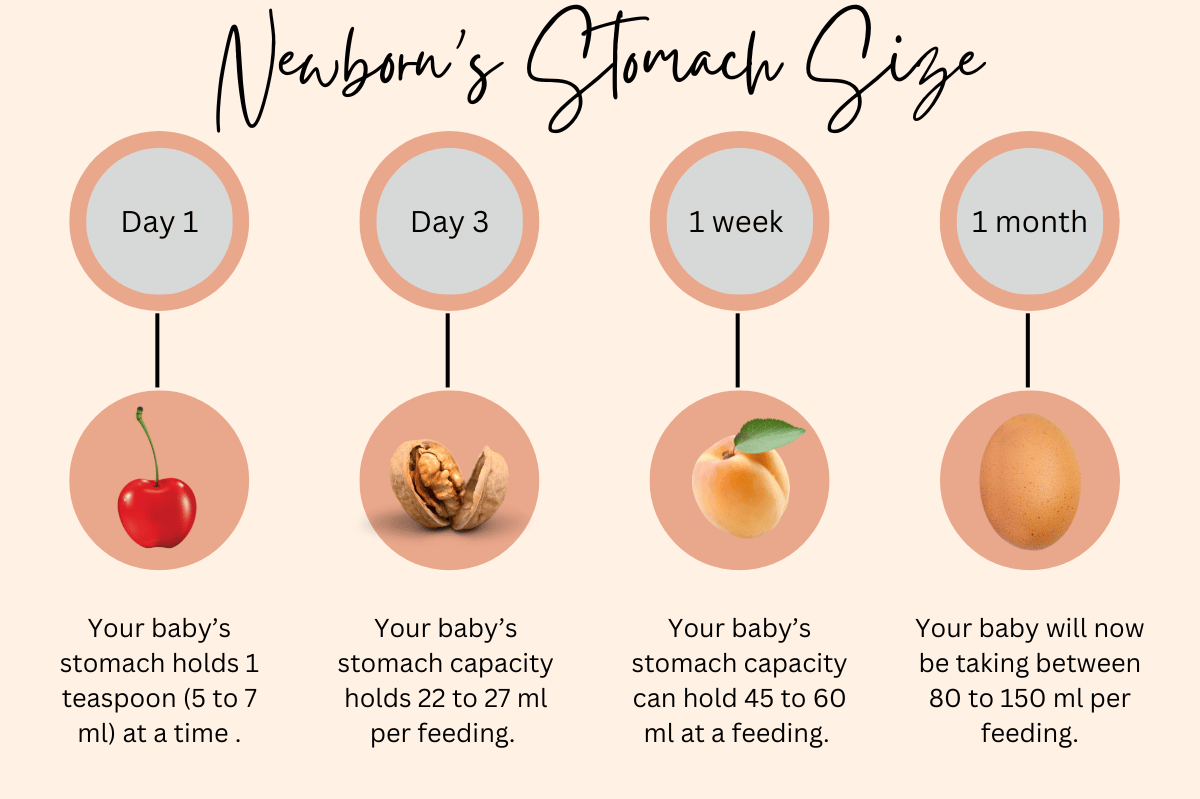

How Big Is Baby’s Stomach Really?
Day 1: About 1 teaspoon/feeding, the size of a small marble.
Day 2: 1-1.4 tsp./feeding
Day 3-6: (depending on when milk comes in) 3/4 – 1 oz. /feeding.
After 10 days: 1-1.5 oz /feeding.
1 month: 1-2 oz. /feeding
3-6 months: About 3 oz. /feeding
6 months: About 3-4 oz. /feeding
Baby’s intake with max out at 3-4 oz., as the amount of breastmilk needed doesn’t change, but the quality and nutritional factors of the milk changes to meet the baby’s needs. Therefore, never needing to go more than 3-4 oz, even though baby is growing.
Am I Enough?
I remember being in the hospital room with with my newborn baby and feeling like he wasn’t get enough because he didn’t seem satisfied. He was crying and “seemed not to be getting enough milk”, (because you know, crying equals hunger (eye roll)). No one told me about small tummies and that colostrum was all they need in the first few days because their tummies are so small. All I was hearing from hospital staff, was that my milk hasn’t come in yet.
Imagine: a new mother with zero experience and knowledge breastfeeding, hearing your milk hasn’t come in?? So then baby isn’t getting fed?? Talk about fear. Natural instinct is that baby needs to eat! In reality, the crying was him teaching me how to be a mother.
Key Aspects of Newborn Feeding
Newborn feeding guidelines are designed to align with the physiological development of a baby’s stomach. These guidelines help parents avoid overfeeding and ensure their child receives adequate nutrition.
Guideline-Based Feeding
Understanding Stomach Capacity
Avoiding Overfeeding Risks
Common Questions About Newborn Feeding
Understanding the intricacies of newborn feeding can help ensure your baby is healthy and happy. Here are some frequently asked questions to guide you.
How often should I feed my newborn?
Newborns typically need to be fed every 2 to 3 hours. It’s important to feed on demand, responding to your baby’s hunger cues.
What is the size of a newborn's stomach?
At birth, a newborn’s stomach is about the size of a cherry, holding around 5-7 ml of milk. It gradually expands as the baby grows.
How can I tell if my baby is getting enough milk?
Signs your baby is getting enough milk include steady weight gain, regular wet diapers, and a satisfied demeanor after feeding.
Can I overfeed my newborn?
While it’s rare, overfeeding can occur. Watch for cues like spitting up or discomfort after feeding, and consult with a pediatrician if concerned.
What are hunger cues in newborns?
Common hunger cues include rooting, sucking on hands, and fussiness. Recognizing these signs can help you feed your baby on time.
How do I know if my baby has a feeding problem?
If your baby is consistently fussy, not gaining weight, or having trouble latching, consult with a healthcare provider for advice.
Newborn Feeding Statistics
Understanding the data behind newborn feeding can help parents make informed decisions. Here are some key statistics.
80% of newborns are breastfed at birth
Newborns feed 8-12 times in 24 hours
A newborn's stomach grows to the size of an apricot by day 10
Overfeeding affects 10% of newborns, leading to discomfort and spit-up issues
Parent Testimonials
★★★★★
“As a first-time mom, I was worried about feeding my newborn. The guidance I received was invaluable, helping me understand my baby’s needs.”

Emily R.
New Mom
★★★★★
“The information on newborn tummy size was eye-opening. It reassured me that my baby was getting just the right amount of milk.”

James L.
Father of Two
Discover the Facts About Newborn Feeding